

Bringing home a newborn is a whirlwind of love, joy, and… a little bit of worry. In those quiet moments, you might find yourself watching the gentle rise and fall of your baby’s chest, wondering, “Is this normal?”
You’re not alone. Every new parent wants to ensure their little one is thriving. This checklist isn’t meant to add to your anxiety; it’s designed to empower you. Think of it as your daily tool for peace of mind, helping you understand your baby’s cues and confidently track their journey to a happy, healthy start.
The Daily Check-in: 6 Things to Monitor Every Day
This simple daily check-in will help you stay attuned to your baby’s needs and spot any potential issues early.
1. Feeding (Input)
Whether you are breastfeeding or formula-feeding, ensuring your baby is eating well is a top priority.
- Frequency: Newborns eat often! Expect 8-12 feedings in a 24-hour period (roughly every 2-3 hours).
- Hunger Cues: Look for early signs of hunger like rooting (turning their head and opening their mouth), smacking their lips, or bringing their hands to their mouth. Crying is a late sign of hunger.
- Signs of a Good Feed: Your baby should seem content and relaxed, or fall asleep, after a feeding. For breastfed babies, you may hear swallowing sounds, and your breasts should feel softer afterward. For more detailed advice on breastfeeding, resources like La Leche League International are invaluable.
2. Diapers (Output)
What goes in must come out! Diaper output is one of the most reliable indicators that your baby is well-hydrated and getting enough to eat.
- Wet Diapers:
- Day 1: 1+ wet diaper
- Day 2: 2+ wet diapers
- Day 3: 3+ wet diapers
- By Day 5 and beyond, expect 6 or more heavy, wet diapers every 24 hours.
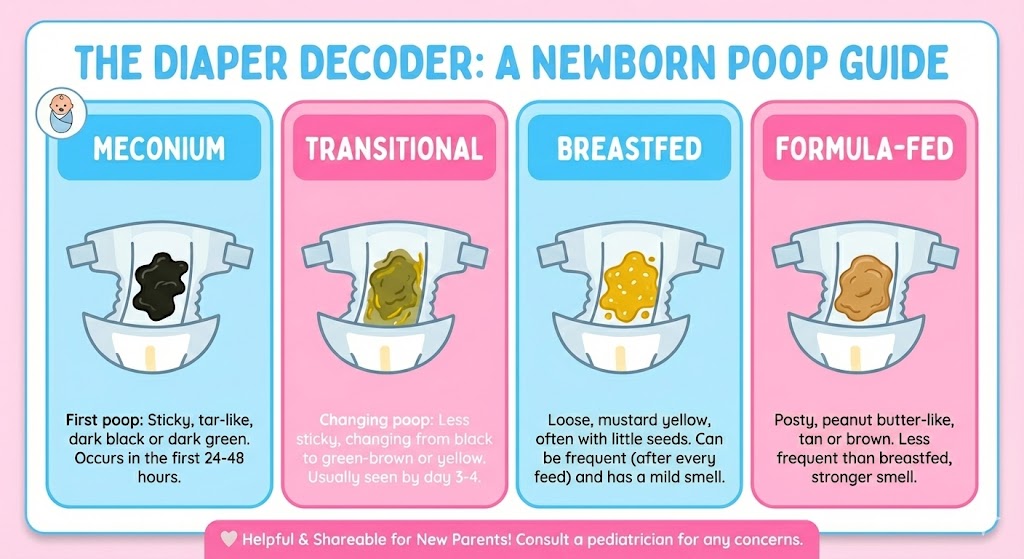
- Dirty Diapers:
- Days 1-2: The first stools are black, sticky meconium.
- Days 3-5: Stools transition to a greenish-brown color.
- By Day 5 and beyond: Expect at least 3-4 soft, seedy, yellowish stools per day for breastfed babies. Formula-fed babies may have fewer, pastier stools.
3. Breathing
Newborn breathing can be surprising! It’s often irregular, with short pauses followed by a burst of quick breaths. This is completely normal. What you need to watch for are signs of respiratory distress. The American Academy of Pediatrics (AAP) advises watching for:
- Nostrils flaring with each breath.
- Retractions: A noticeable pulling-in at the neck, below the ribcage, or between the ribs.
- Persistent grunting with each breath.
- A breathing rate consistently over 60 breaths per minute when calm.
4. Temperature
A newborn’s temperature is a key indicator of health. The most accurate reading is a rectal temperature.
- Normal Range: A normal rectal temperature for a newborn is between 97.9°F (36.6°C) and 100.3° F (37.9°C).
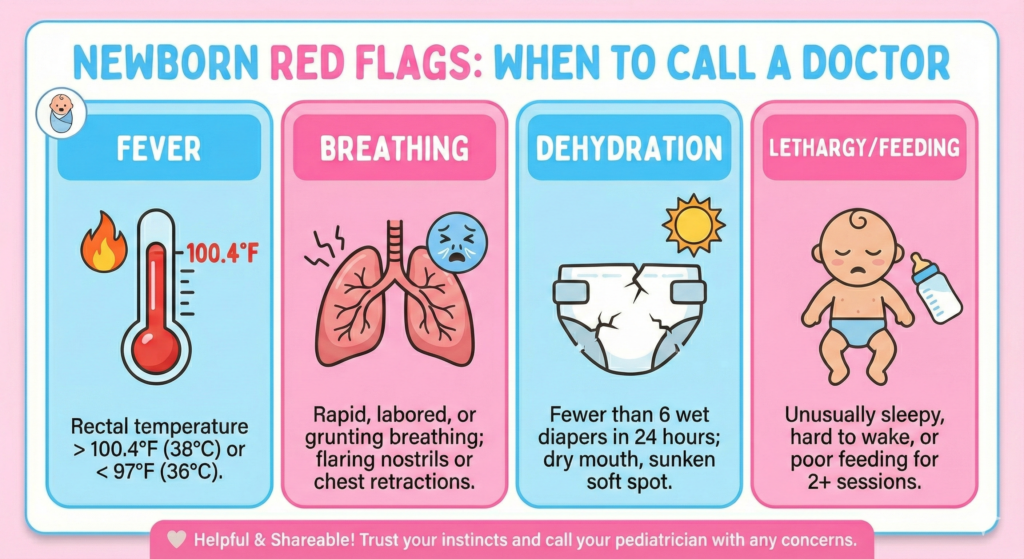
- What to Do: A temperature of 100.4°f (38°c) or higher is considered a fever in a newborn and requires an immediate call to your pediatrician.
5. Skin & Color
Your baby’s skin provides many clues about their health. Peeling skin and small white bumps (milia) or “baby acne” are very normal. The most important thing to monitor is for signs of jaundice.
- What is Jaundice? A common condition where a baby’s skin and the whites of their eyes look yellow. As the Mayo Clinic explains, it’s caused by excess bilirubin in the blood.
- How to Check: In natural daylight, gently press your finger on your baby’s forehead or nose. If the skin looks yellow where you pressed, it may be jaundice.
6. Demeanor & Mood
You are the expert on your baby’s personality. Is your baby acting like their usual self?
Lethargy: A major warning sign is a baby who is overly sleepy, limp, or very difficult to wake for feedings.
Alertness: They should have periods where they are calm and alert, making eye contact.
Consolability: When they cry, can they eventually be soothed by feeding, holding, or rocking?
The Weekly Watch: Key Health Observations
Umbilical Cord Stump
The stump will dry up and fall off on its own, usually within 1-3 weeks.
- Normal Healing: Keep the area clean and dry. Fold the diaper down to expose it to air. It’s normal to see a small amount of crusted blood when it falls off.
- Signs of Infection: Call your doctor if you see pus, a foul-smelling discharge, or significant redness and swelling on the skin around the stump.
Weight Gain
It’s normal for newborns to lose up to 10% of their birth weight in the first few days. Your pediatrician will monitor their weight closely, but according to the March of Dimes, most babies are back to their birth weight by about two weeks and then continue to gain steadily.
Red Flags: When to Call the Pediatrician Immediately
Trust your instincts. If something feels wrong, it’s always best to be cautious. Call your pediatrician or seek immediate medical care if you notice any of the following:
- Fever: A rectal temperature of $100.4^\circ F$ ($38^\circ C$) or higher.
- Trouble Breathing: Any of the signs of respiratory distress mentioned above.
- Signs of Dehydration: Fewer than 6 wet diapers in 24 hours (after day 5), a sunken soft spot (fontanelle) on the head, or a dry mouth.
- Feeding Issues: Refusing to eat for several feedings in a row or forceful, repeated vomiting.
- Jaundice that is worsening or spreading to the arms and legs.
- Lethargy: Being unusually sleepy, limp, and difficult to wake.
- Inconsolable Crying: Crying that is unusually high-pitched or cannot be soothed for hours.
Trust Your Instincts: You Know Your Baby Best
This checklist is your guide, not a test. The most powerful tool you have as a parent is your intuition. You will learn your baby’s unique rhythms and cues better than anyone. If you feel that something isn’t right, don’t hesitate to reach out to your pediatrician. There are no silly questions when it comes to your baby’s health. You are their best advocate.